>>

Rich, braised beef in a savory-sweet broth served over chewy noodles—comforting Korean-inspired bowls perfect for weeknights and gatherings.
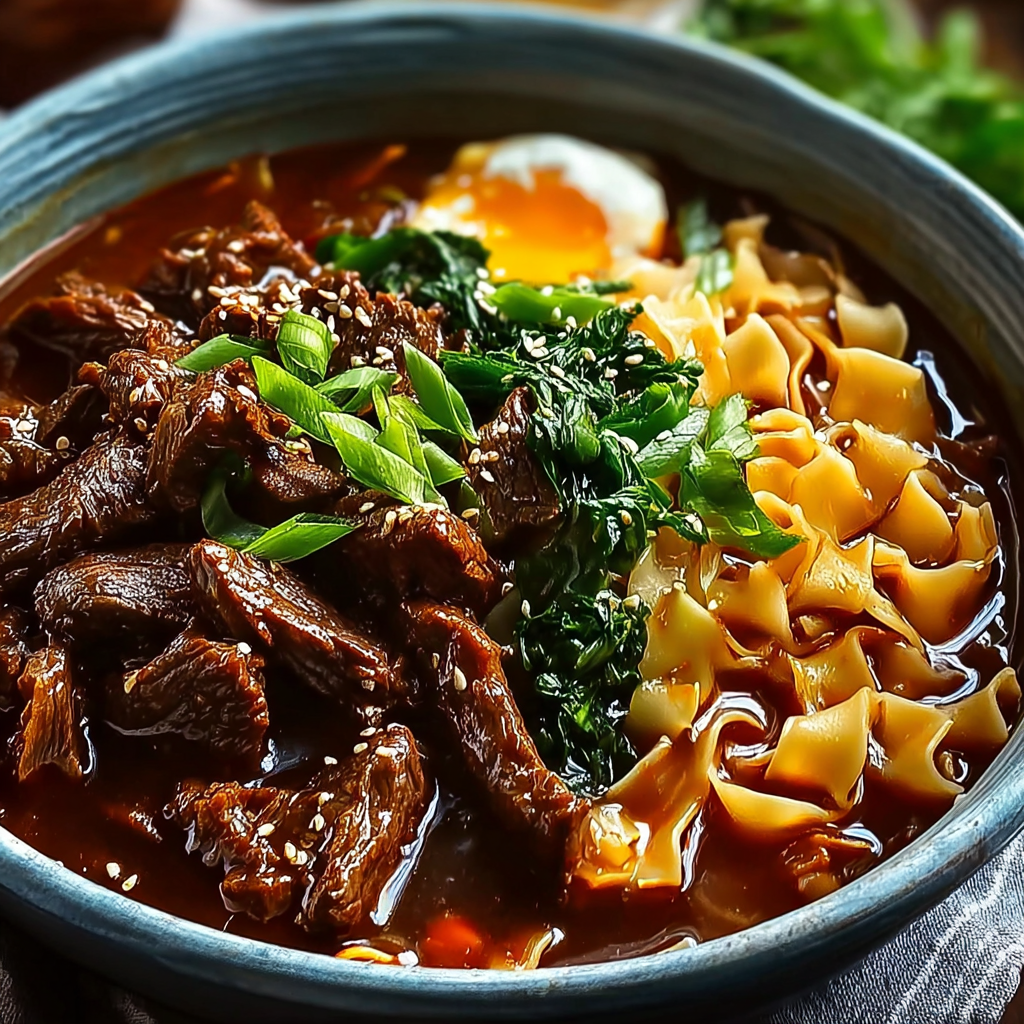
This Korean beef noodles dish has been one of my most comforting discoveries on cold evenings and rainy weekends. I stumbled onto this flavor profile while experimenting with pantry staples and a large chuck roast on a weekend when friends were coming over. What started as a simple braise evolved into a meal that fills the kitchen with an alluring aroma: soy, garlic, ginger and a hint of gochujang that gives a gentle, rounded heat. The result is tender, forkable beef paired with springy noodles that soak up that deep, savory broth—every bite feels like a warm, personal hug.
I remember the first time I served this to my family: the house fell quiet except for the clink of spoons against bowls, and my father declared it “instant comfort.” The texture contrast is key—the beef should be fall-apart tender while the noodles remain pleasantly chewy. It’s a flexible formula too: use fresh udon for plushness or dried ramen for a quicker, more accessible option. Over the years I’ve refined timings, seasoning balance and garnishes so that this version reliably delivers a rich, layered bowl that’s perfect for casual dinners or when you want something special without complicated technique.
My family now requests this for special occasions and slow Sunday lunches. I love that it’s both humble and indulgent: a simple set of ingredients transformed by time and gentle simmering into something memorable.
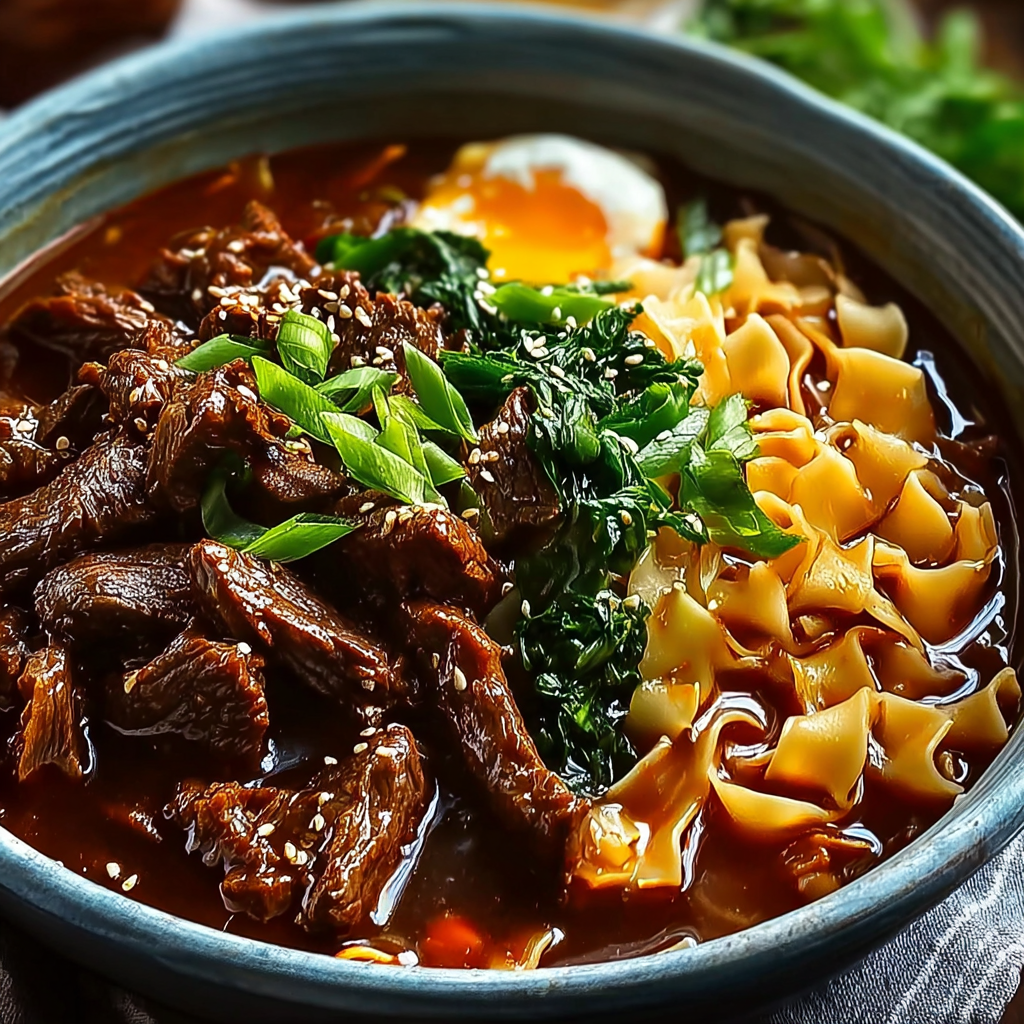

What I love most is how forgiving this method is: slow heat does the heavy lifting. Once I mastered searing and the gentle simmer, the rest was about balancing salt and sweetness. Friends have surprised me by how much they favor this over classic noodle bowls—the deeper, braised beef flavor makes it feel like a celebration even on an ordinary weeknight.
Store cooled leftovers in airtight containers: keep beef and broth together for up to 4 days in the refrigerator. For longer storage, portion broth and beef into freezer-safe containers and freeze for up to 3 months—label with date. If you’ll reheat frozen portions, thaw overnight in the refrigerator and reheat gently on the stovetop over low heat to preserve texture. Noodles store separately for best results: refrigerated for 2–3 days in a small amount of oil to prevent sticking, then reheat by briefly blanching or microwaving with a splash of water.
If you don’t have beef chuck, brisket or short ribs are acceptable alternatives—adjust simmer time for thicker cuts. For gluten-free needs, replace soy sauce with tamari and use rice noodles or certified gluten-free wheat noodles. If gochujang is unavailable, blend 1 tbsp miso with 1 tsp chili paste and 1 tsp brown sugar for a similar umami-chili balance. Reduce sodium by using low-sodium broth and soy sauce; compensate with a touch more brown sugar or a splash of fish sauce for depth if needed.
Serve in deep bowls with extra hot broth on the side for dunking. Pair the bowl with crisp kimchi, quick-pickled cucumbers, or blanched spinach tossed with sesame oil and garlic. For a heartier meal, add a soft-boiled egg or a handful of sautéed mushrooms. Garnishes like sliced chilies, toasted sesame seeds and scallions add both color and texture—consider a drizzle of chili oil for guests who want more heat.
While this preparation is inspired by Korean flavor elements—gochujang, sesame oil and soy—it blends braising techniques common across East Asian home cooking. Gochujang itself is a fermented chili paste central to Korean cuisine, contributing complex umami and sweetness. This bowl is a home-style adaptation that leans on approachable ingredients to evoke those flavors without requiring specialty cuts or lengthy fermentation steps.
In colder months, double the batch and freeze portions—this dish shines as a winter warmer. In spring and summer, lighten the bowl by using less braising time and adding a bright garnish of julienned cucumber, lime, and fresh herbs. Swap brown sugar for a small amount of honey or maple if you prefer seasonal sweetness, and add quick-pickled daikon for a tangy contrast in warmer weather.
Batch-cook the beef and broth on the weekend and refrigerate in portions with cooked or separate noodles. Reheat gently and assemble quickly for lunches or weeknight dinners. If you’re prepping for a week, assemble individual servings in microwave-safe containers with noodles on the bottom and beef on top—add greens and herbs after reheating to keep them fresh.
There’s a special satisfaction in ladling this braised beef over chewy noodles and watching the broth shimmer—simple steps, big reward. Make it your own with favorite garnishes and enjoy the warmth of a bowl that brings people together.
Sear the beef in batches to ensure proper browning; overcrowding the pan will steam the meat and reduce flavor development.
If the broth tastes too salty after reducing, add a small peeled potato while simmering; remove before serving to absorb excess salt.
For extra gloss and body, finish the sauce with a teaspoon of cold butter off heat or a cornstarch slurry (1 tsp cornstarch + 1 tbsp cold water) if you prefer a thicker coating.
This nourishing korean beef noodles recipe is sure to be a staple in your kitchen. Enjoy every moist, high protein slice — it is perfect for breakfast or as a wholesome snack any time.
This Korean Beef Noodles recipe makes perfectly juicy, tender, and flavorful steak every time! Serve with potatoes and a side salad for an unforgettable dinner in under 30 minutes.
Pat beef dry and season with black pepper. Heat a Dutch oven over medium-high, add oil, and brown beef in batches 2–3 minutes per side until deep brown. Transfer to a plate.
Reduce heat to medium, add minced ginger and garlic, sauté 45–60 seconds. Add brown sugar then a splash of broth to deglaze, scraping up browned bits from the pot.
Return beef to pot. Add remaining beef broth, water, soy sauce and gochujang. Stir to combine and bring to a gentle simmer.
Partially cover and simmer on low for 2–2.5 hours, checking occasionally. The beef is done when easily pierced with a fork and the broth has concentrated.
Skim any excess fat, adjust seasoning with soy or sugar as needed, and stir in sesame oil off heat. Reduce uncovered for thicker sauce if desired.
Cook noodles according to package directions until just al dente. Drain and rinse briefly if fresh; divide among bowls.
Ladle beef and braising liquid over noodles, top with sliced green onions, sesame seeds and cilantro. Serve immediately.
Last Step: Please leave a rating and comment letting us know how you liked this recipe! This helps our business to thrive and continue providing free, high-quality recipes for you.
Leave a comment & rating below or tag
@festive-cooks on social media!
Crispy, golden Parmesan crusted chicken made in the air fryer for a quick family favorite that stays juicy inside and crunchy outside.
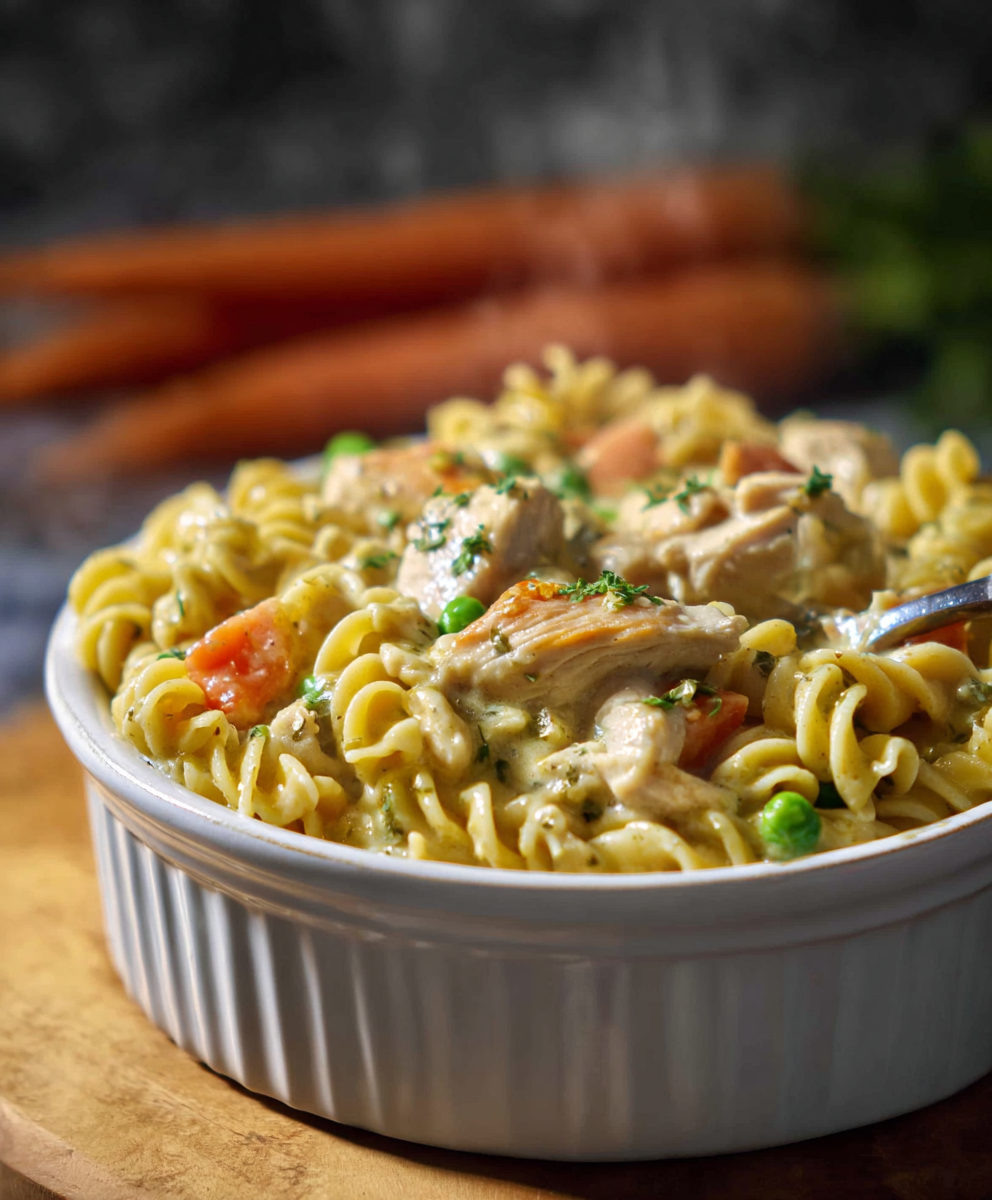
A cozy one-skillet mashup of pot pie comfort and egg noodle ease—ready in about 35 minutes and perfect for weeknight dinners.
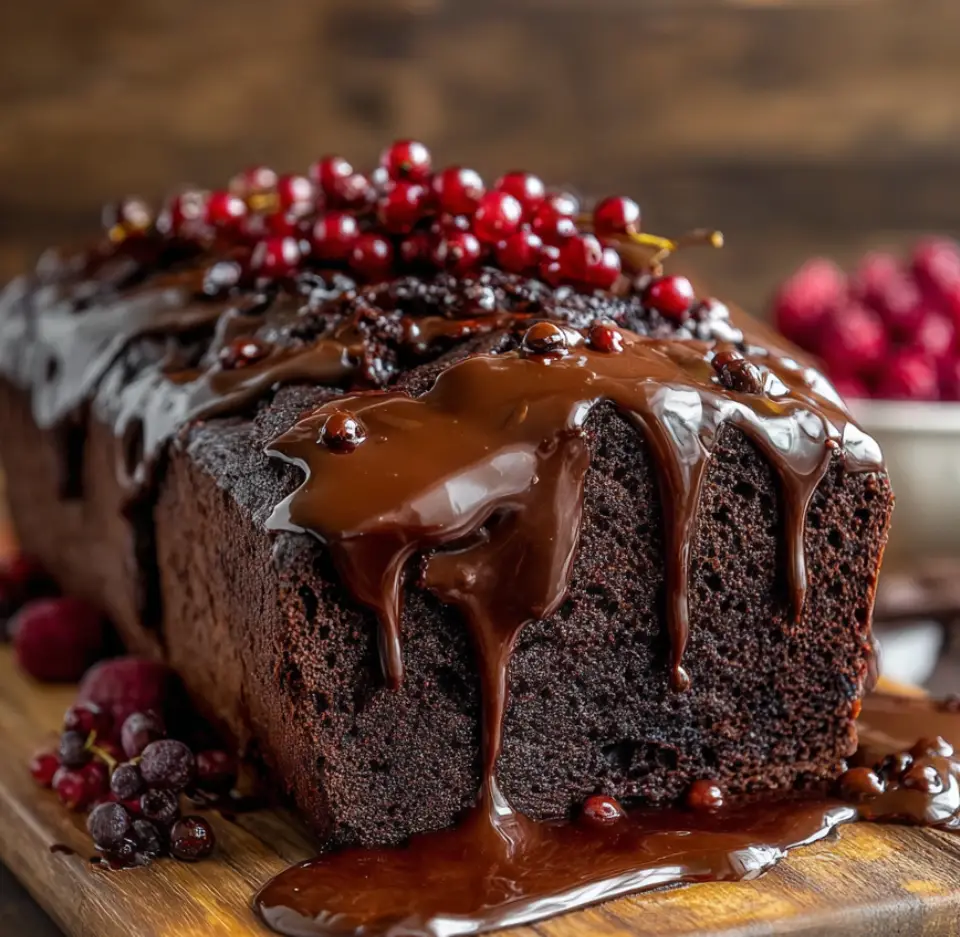
A gooey, chocolate-packed loaf with a molten hot-fudge swirl — brownie texture in bread form, perfect warm with a scoop of ice cream.
Leave a comment & rating below or tag @festive-cooks on social media!
Enjoyed this recipe? Share it with friends and family, and don't forget to leave a review!
This recipe looks amazing! Can't wait to try it.
Comments are stored locally in your browser. Server comments are displayed alongside your local comments.

Join to receive our email series which contains a round-up of some of our quick and easy family favorite recipes.